

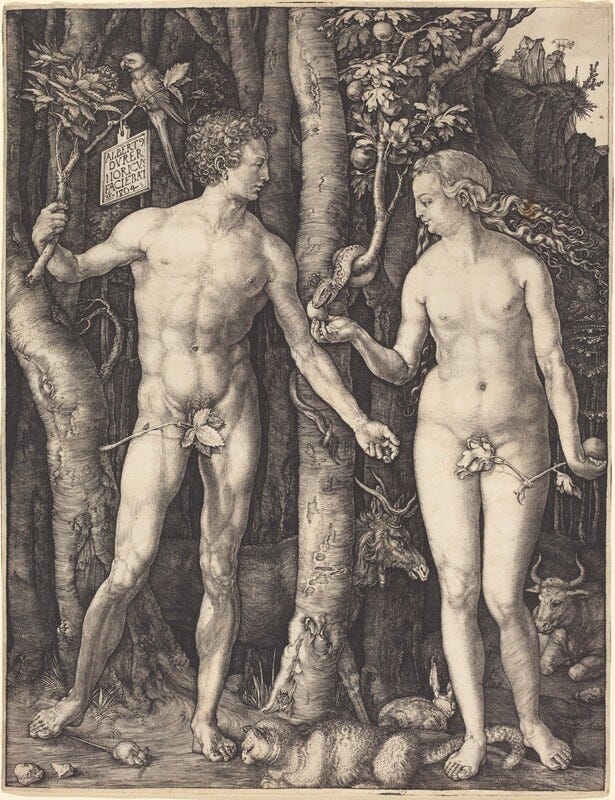
Why are we ashamed at being naked?
This topic is both strange, taboo, and also laughingly common sensical. It’s one of those facts so basic that no one questions it.
And yet, to understand human shame in regards to the body is to understand a key facet of your own nature. Indeed, as strange as it sounds, understanding the fear and shame associated with the human body actually leads to a truly felt sense of self knowledge.
This comes from none other than St. Augustine himself, who argued in The City of God that shame teaches you the roots of your origins, the truth of your nature, and — oddly enough — what it means to fulfill that very nature.
Today then, we’ll see how…
I am 100% reader-supported. This newsletter is free, but if you’re able to support, please consider a paid membership — it helps my mission of sharing Truth, Beauty and Goodness with maximal reach
As a paid member, you’ll get:
Two full essays a week
Access to all recordings (past & future) of my Great Books lectures on this publication
Eternal gratitude from me
Their Eyes Were Opened…
Augustine says man’s sense of shame is tied to the Fall of man. The narrative makes clear that Adam and Eve, in pre-fallen paradise, enjoyed a heavenly bliss on Earth, and felt no sense of shame at their nakedness.
Yet, after the fall, the first thing they do is cover up and hide.
Specifically:
“She took of its fruit and ate; and she also gave some to her husband, and he ate. Then the eyes of both were opened, and they knew they were naked; and they sewed fig leaves together and made themselves aprons”
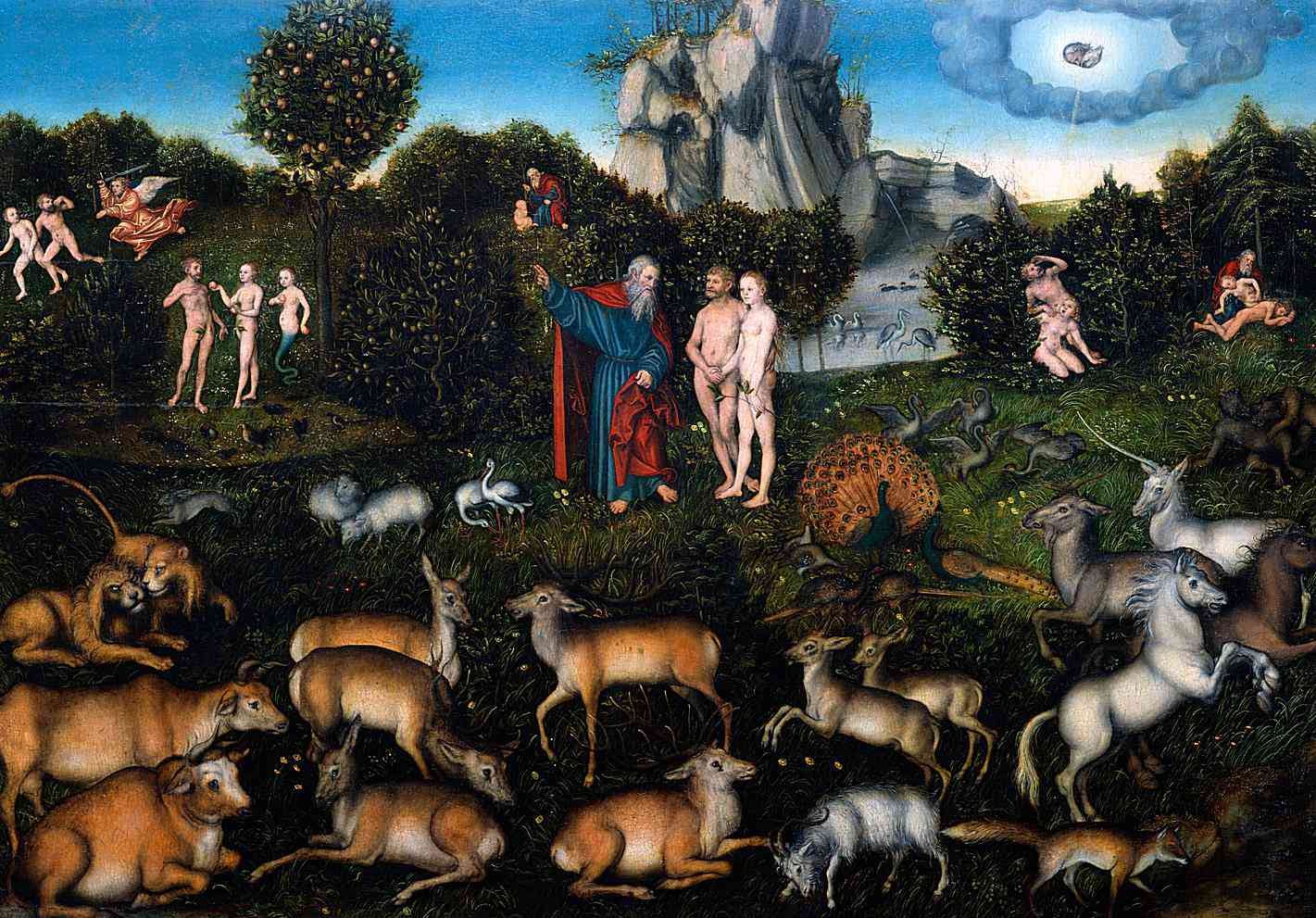
Their eyes being opened isn’t meant to be literal, as if they were sewn shut earlier. Their opened eyes are understood as an expansion of their consciousness — they’ve grown aware of good and evil. Thus, they understand the nature of evil, and how others can be harmed, and even worse, how they can be harmed.
They are vulnerable and know it; they are naked…
The Scourge of Lust
So one can appreciate how the fall of man leads to a proverbial nakedness — a fear of realizing one’s vulnerability — but why exactly do we cover our bodies?
Augustine notes how man feels shamed at human genitalia specifically. A man might be comfortable on the beach with his shirt off, but would be horrified to walk around in a t-shirt without his swim trunks.
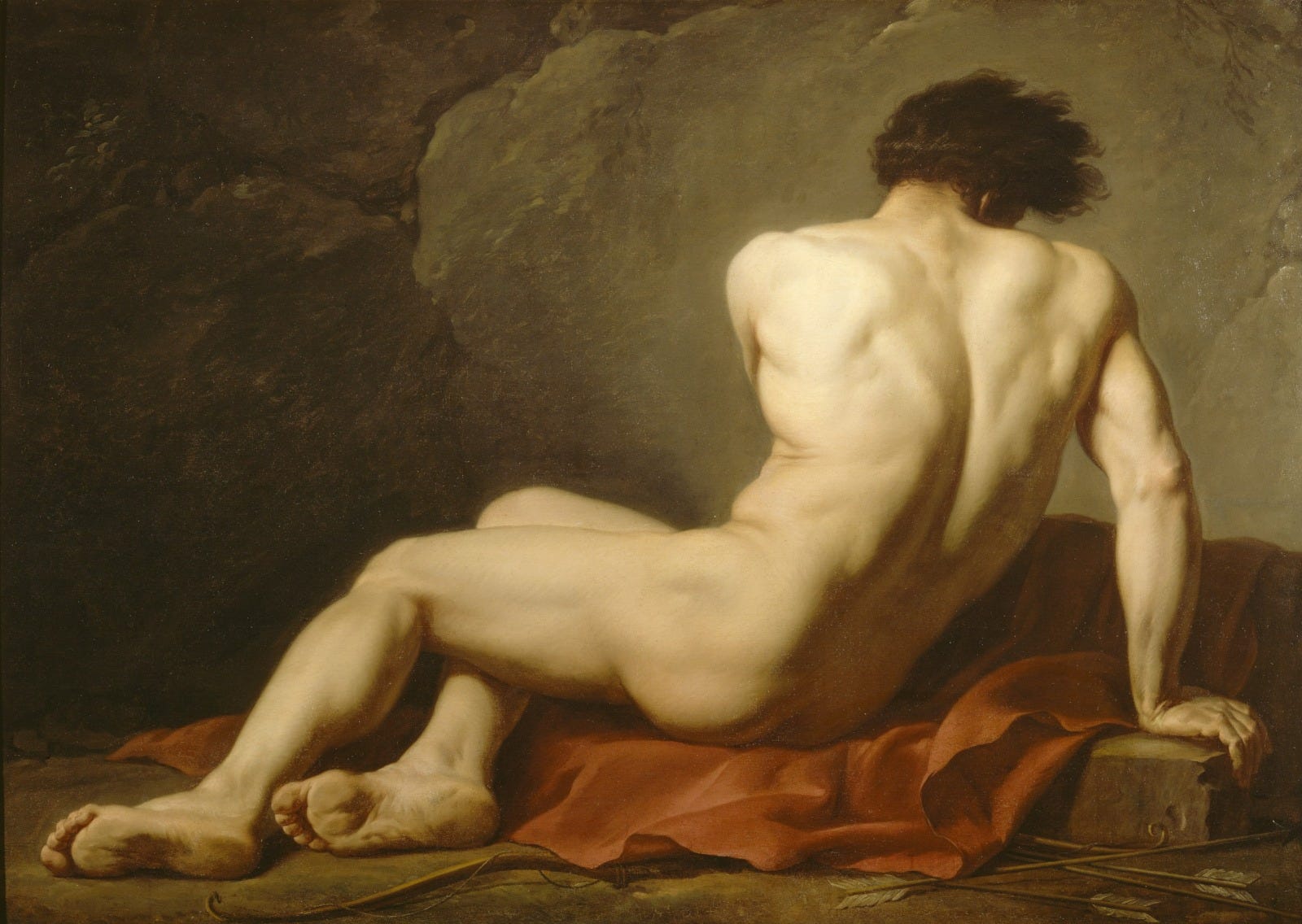
Why is this so?
Augustine makes it clear:
“[Man is] embarrassed by the insubordination of their flesh, the punishment which was a kind of evidence of their disobedience…
Thus modesty, from a sense of shame, covered what was excited to disobedience by lust, in defiance of a will which had been condemned for the guilt of disobedience; and from then onwards the practice of concealing the pudenda [nakedness] has become a deep-rooted habit of all peoples, since they are all derived from the same stock”
So man is ashamed of one’s genitals because they’re a part of the body that is solely moved by lust, rather than reason. In other words, human arousal is a state in which the bestial part of man rules and his reason is dulled — its thus a shame-induced state that echoes the fall, in which man’s body, urges, and temptations act against his reason, desire, and best wishes. This is made nowhere more clear than the human being aroused against his will.
Augustine is very bleak about this. He says our nature is so marred that shame will follow us for life, and has fundamentally distorted our nature. On human sexuality specifically, he’ll even go so far as to call the lawful union of husband and wife tainted with sin.
Ultimately, the broader tradition agrees with Augustine’s core message. Shame is a clear byproduct of the fall. Yet, believe it or not, the tradition affirms that the full understanding of shame is actually even broader and more complex than merely the agonies of lust.
The full understanding of shame, believe or not, actually reveals the deepest needs and desires of the human condition.
Shame as Protection
This expanded understanding of shame, sexuality, and the human body comes from John Paul II. He gave a series of weekly speeches for roughly a decade called The Theology of the Body, which revisits these same ideas Augustine discussed.
JP2 agrees with Augustine that shame of “nakedness,” is a byproduct of the Fall, but for him it’s not strictly due to lust alone. He asserts that shame is actually defensive and relational — it speaks not just to sexual shame, but an implicit realization of how the entirety of your being is fallen and thus vulnerable to evil.
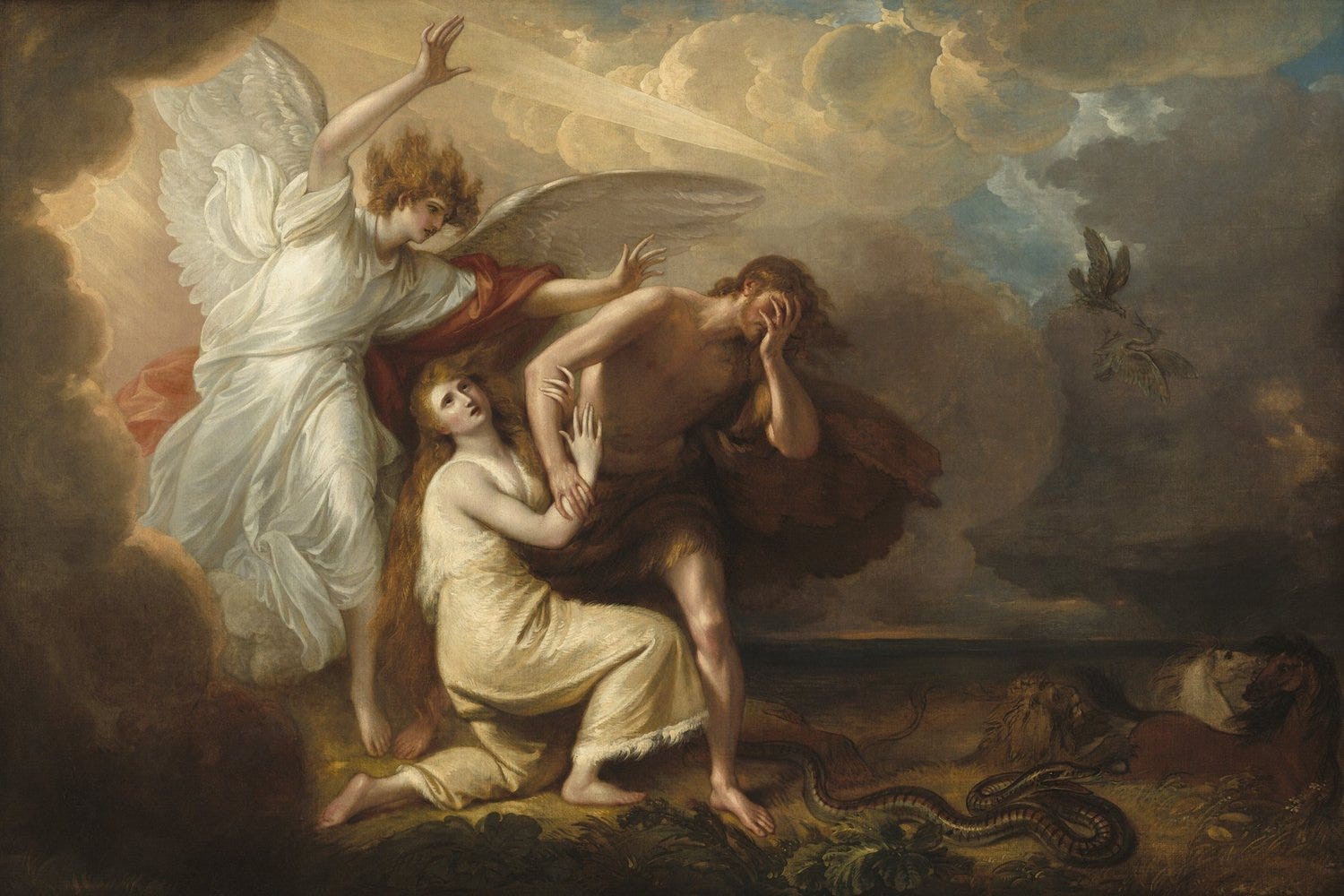
For instance, the naked body can be subject to a lustful gaze — in which our human person is reduced to an object — but we can also be mocked, disgraced, shunned, or rejected. He considers the naked body the fullness of man’s soul laid bare, and nothing could be more humiliating than to have the “fullness,” of your soul known, rejected, and mocked.
Consider for example, if a stranger in the street stopped you, pointed, and laughed at you. This might be unsettling, but you’d probably think them unwell before you took heartfelt offense.
Now, however, imagine you were naked in public, and that same stranger pointed and laughed at you. This is understood as a universal nightmare for everyone. It’s a classic “bad dream,” to imagine yourself naked “on stage,” and mocked.
This is the shame of the Fall. The notion is not just that your literal nakedness is amusing, but that the most intimate aspects of your being are rejected.
If we are fallen creatures, made in the image of love, and thus yearning for love, then to be rejected or objectified is amongst the greatest affronts to our being. Indeed, the deepest of human fears are rejection, or public humiliation — with perhaps the worst fear being publicly humiliated while naked.
We can appreciate this expansion of Augustininan logic, but one hitch remains. Remember that Augustine said the Fall was so drastic that it permanently marred human sexuality with sin. Even a lawful marital embrace was “tainted,” in his eyes.
This was one of the rare moments when Augustine went too far, and the Church had to “rescue,” human sexuality as an inherent good.
Here’s how…
The Rescue of Eros
JP2’s correction is simple but substantive. He said to understand the virtuous nature of the conjugal embrace, man must understand the full nature of his body.
“The human body, with its sex, and its masculinity and femininity seen in the very mystery of creation, is not only a source of fruitfulness and procreation…
It includes right from the beginning the nuptial attribute, that is, the capacity of expressing love, that love in which the person becomes a gift and—by means of this gift—fulfills the meaning of his being and existence.”
In other words, he asserts that the lawful union of husband and wife — grounded in charity — is the fulfillment of man’s nature. The conjugal act is not just an “experiential thrill,” but precisely what makes man attain a temporal sense of completion.
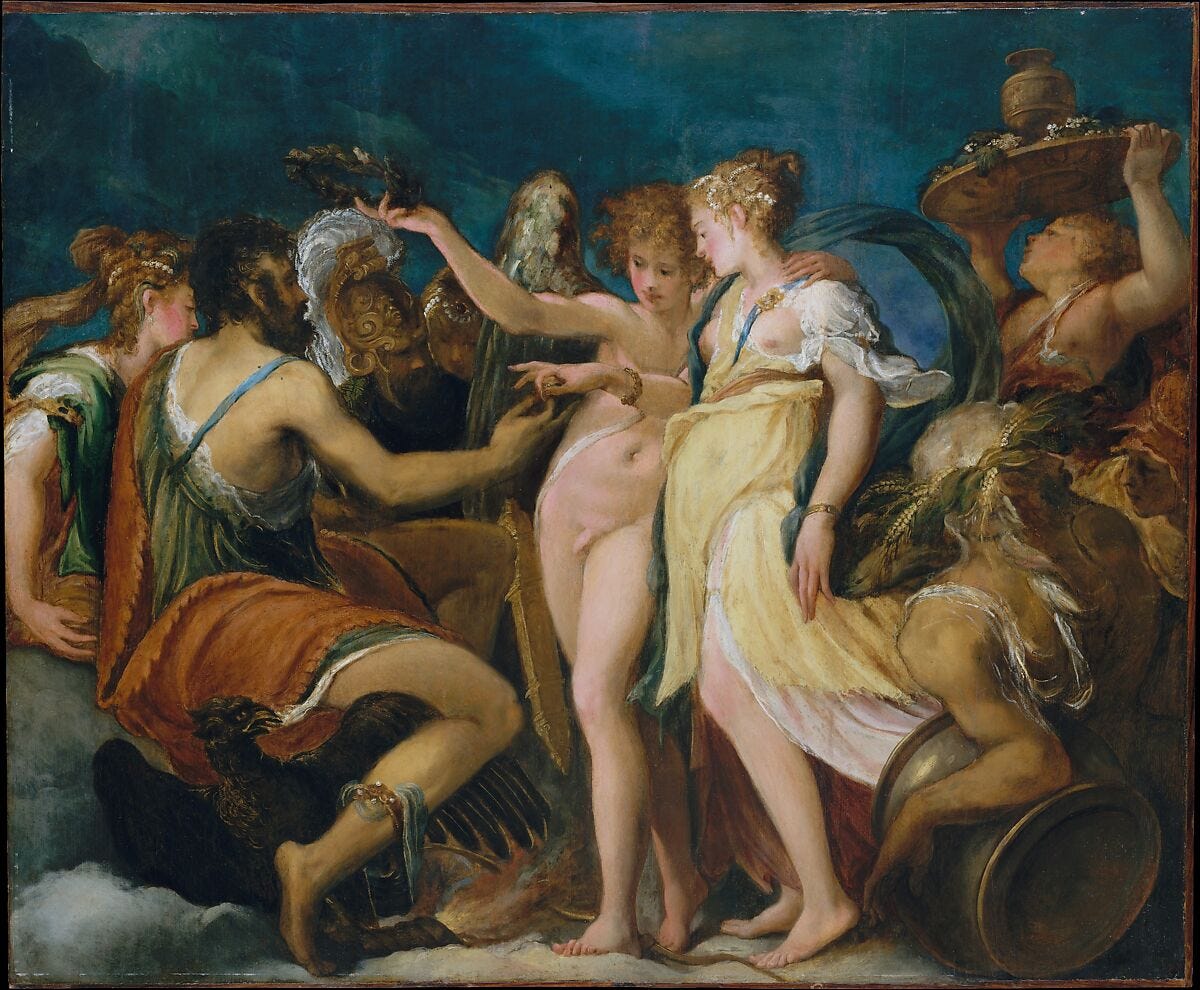
Consider how, in a loving marriage, one’s sense of shame at nakedness disappears in front of one’s spouse.
Why is this the case?
Well, if marriage is a bond of love as “mutual self-gift,” where both spouses have “given themselves,” to each other, then it’s natural for man to be “naked,” with their spouse. This is not merely literal, but emotionally and spiritually as well. If two are united in a bond of love in which both desire the good for each other, the shame of nakedness in all facets disappears, for trust is established and one need not feel vulnerable.
In other words then, shame is a protective barrier guarding one’s vulnerability — one that doesn’t scorn the conjugal act, but protects human eros as the most treasured aspect of man’s nature, fulfilling his being in the grounds of marital embrace. Shame then, is not an evil, but a protective grounds for a fallen man in a fallen world. It is the safeguard of human desires, the greatest of which is love, fulfilled in the marital act, which affirms nothing short of the simple but profound declaration that life was created good, and is indeed worth living.
I am 100% reader-supported. This newsletter is free, but if you’re able to support, please consider a paid membership — it helps my mission of sharing Truth, Beauty and Goodness with maximal reach
As a paid member, you’ll get:
Two full essays a week
Access to all recordings (past & future) of my Great Books lectures on this publication
Eternal gratitude from me