


Most of modern man today will live and die without ever knowing themselves.
They may live a full life, a long life, a life of material prosperity, or a life of traveling the world… and yet they will never know leisure, nor themselves.
To be a modern man is to toil endlessly, and vacation to be recharged to toil longer, and even retirement itself fails to provide man a relief from his restlessness. For one cannot spend a lifetime of anxious toil, and expect to suddenly learn leisure, as leisure is an art that requires practice. And if you wait until old age to learn leisure, you may never learn it at all.
The above statements are not my mere opinion, but the very implications that conclude Joseph Pieper’s famous essay on leisure. His argument — which we’ve covered for a month now — is simple:
The world of “total work,” is threatening to enslave man to utility, toil, and anxiety, and fundamentally alienate him from his nature, his vocation, and his destiny.
We finally arrive at the conclusion, not just how to beat the world of total work, but understanding the true roots of leisure, and orienting our lives around them to restore meaning, purpose, and happiness in a modern world coercing us to rebel against our own nature.
I am 100% reader-supported. This newsletter is free, but if you’re able to support, please consider a paid membership — it helps my mission of sharing Truth, Beauty and Goodness with maximal reach
As a paid member, you’ll get:
Two full essays a week
Access to all recordings (past & future) of my Great Books lectures on this publication
Eternal gratitude from me
(this is part 4 of a 4-part series on Human Leisure. You can find part 1 here, part 2 here, and part 3 here)
Total Work, Revisited
Recall that Pieper says the modern world is overrun by the phenomena of “total work,” where man must always be busy, productive, or useful. Studies, career, and free time must all be spent doing things or striving for gain. No longer is their room for modern man to be — to enjoy “useless,” activities that are ends in themselves.
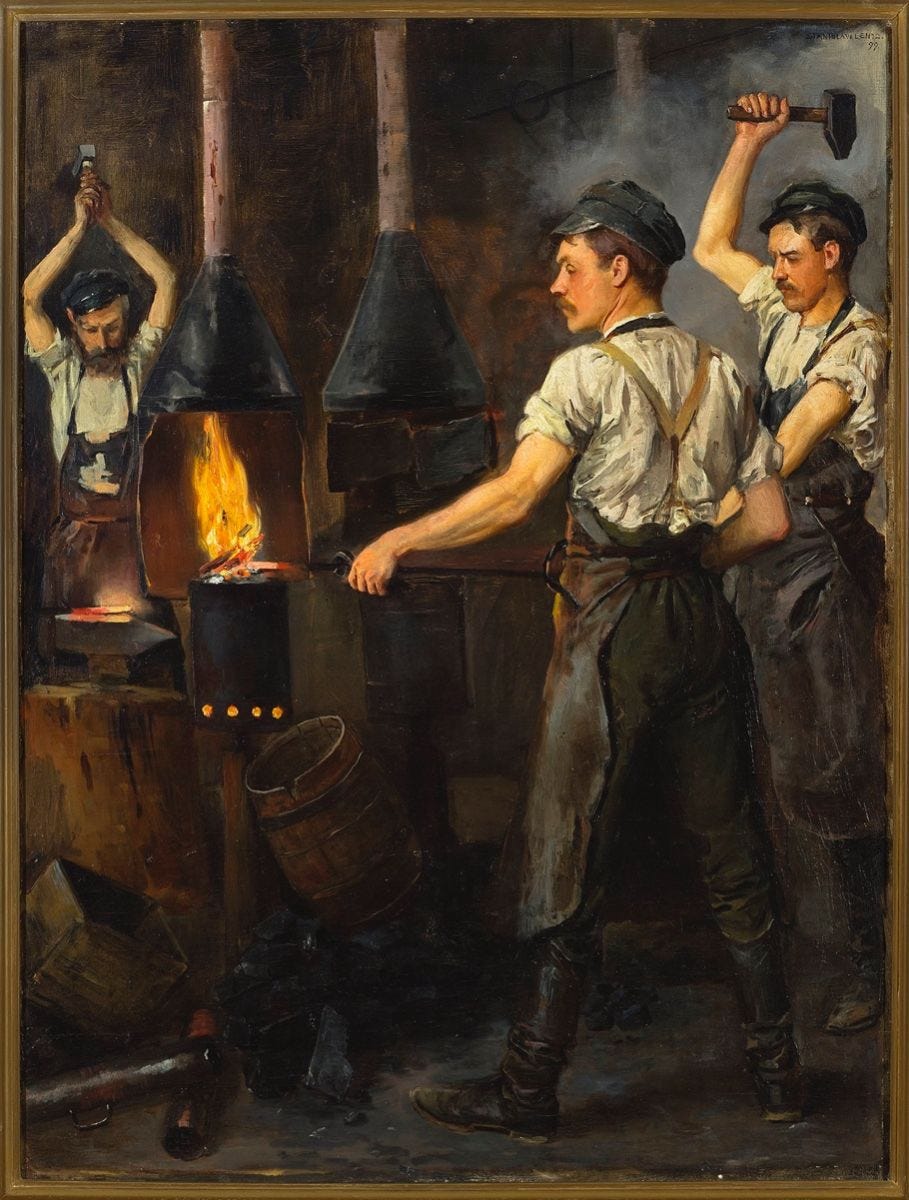
The root of this vice was the deadly sin of acedia (sloth), which is far more than laziness, but an inability for one to “joyfully affirm his own being.” In other words, both the couch potato and the strenuous worker are guilty of acedia.
The art of leisure is a rebellion found in cultivating practices that are ends in themselves — like the joy of deep study in literature, or listening to a beautiful symphony. These practices don’t help you “get ahead,” but they ground you in yourselves and connect you to the world.
We ended last week’s essay by noting, however, that a true restoration of leisure asks for more than creating cultivated individuals, but restoring leisure at scale to society via institutions.
But to make this restoration a possibility, Pieper brings us to the last chapter of his essay, where we diagnose the true roots of leisure’s origins.
Leisure in the Divine
Earlier, Pieper pointed out the festivals and celebrations are communities practicing leisure at scale — for the festival is man joyfully affirming his own being in reality.
He now reveals what celebration itself is rooted in:
“If celebration is the corse of leisure, then leisure can only be made possible on the same basis of the festival. That basis is divine worship.
The meaning of celebration is man’s affirmation of the universe and his experiencing the world in an aspect other than the everyday one. Now we cannot conceive a more intense affirmation of the world than ‘praise of God,’ the Creator of this very world.”
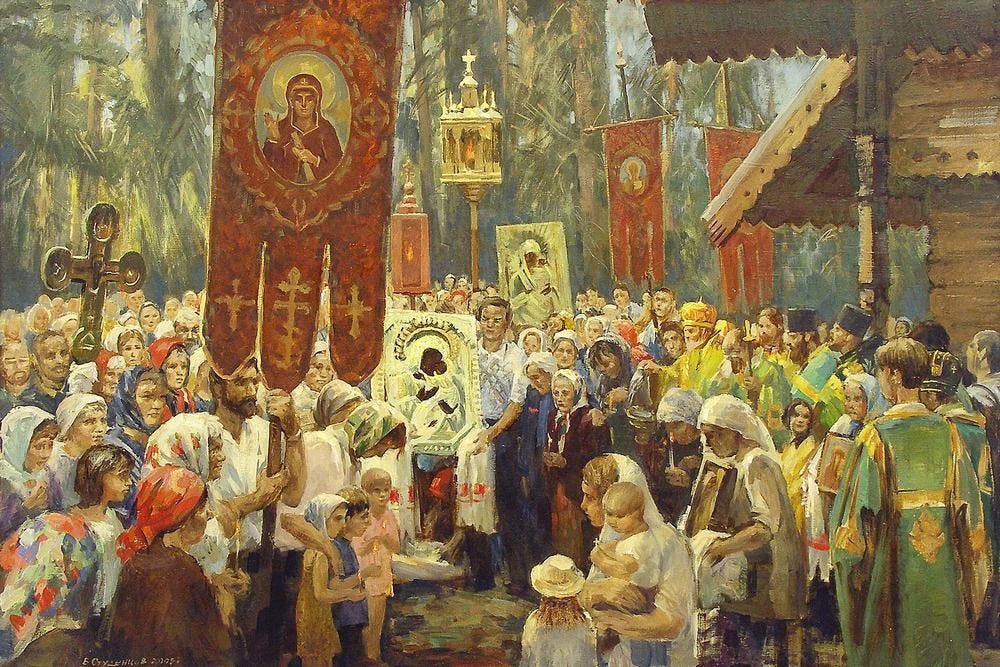
Pieper recognizes this statement will be a cause of discomfort to his audience, but his point stands that all festivals are tied to the divine. This was patently obvious in Greco-Roman antiquity, where all feasts and celebrations honored the Pantheon of deities. The same is true for Medieval Christendom, via Christmas, Easter, and normative feast days.
Conversely, the secular modern world has failed to create any lasting festivals of their own. There are Federal holidays, but Memorial Day is a husk of the joys felt at Christmas time.
The French Revolution, Pieper notes, also attempted to manufacture secular festival days, like “Brutus day,” but these attempts failed as well. Indeed, a good festival is a spiritually grounded, communal affirmation of joy at the beneficence of life itself, and such a spiritual experience must be grounded in a transcendental reality above man that unites him. In other words, man cannot properly celebrate his existence without piety to the divine.
Finding the Fullness of Time
It’s here where we see Pieper unapologetically announce his conclusion of restoring true and lasting leisure to mankind:
“Culture lives on religion through divine worship. And when culture itself is endangered, and leisure is called into question, there is only one thing to be done: to go back to the first and original source…
Leisure cannot be achieved at all as a means to an end, even though that end be “the salvation of Western Civilization.” Celebration of God in worship cannot be done unless it is done for its own sake.
That most sublime form of affirmation of the world as a whole is the fountainhead of leisure.”
So divine worship is the key to learning leisure, but such worship is futile if your goal is to “learn leisure.” In other words, leisure is not something you learn or pursue, rather its the byproduct of a harmonious orientation to God, which brings order and grace to your soul and allows love to flow outward to your neighbor and the world as such.
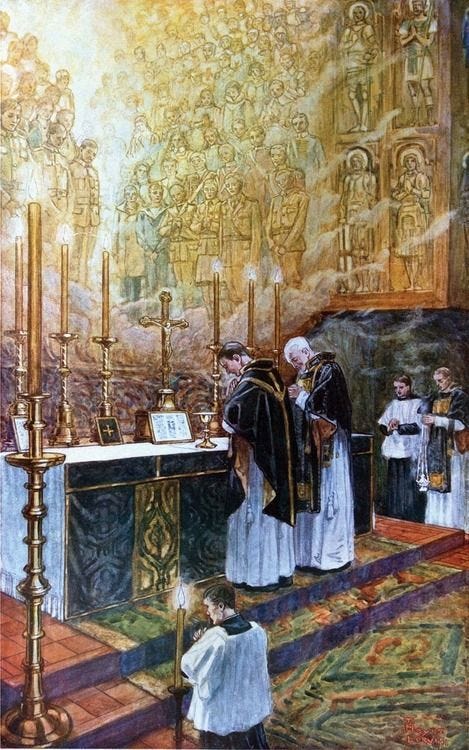
Recall also the implication of divine worship. Pieper, as a Catholic, likely has the mass in mind. In Catholicism, the mass is not considered an hour of praise, but a propitiatory sacrifice — a worship of active participation in which the congregation unites as one body in communion with Christ in memory and participation of his passion, death, crucifixion, and resurrection. In other words, divine worship of the mass is a celebration of mankind united in the fullness of time.
It’s a cosmological affirmation of triumph and the sanctity of life in past, present, and eternity. It’s not enough for man to recognize he’s a spiritual individual who ought to become cultured, well-read, and cultivated in the arts. Not even personal piety is enough.
Man is made for communion. Man’s fullness of nature is realized in harmony with both the divine and his neighbor. The Christian institution of the Sabbath is that which makes man most truly himself, for only in a charity of adoration to the Creator, and well-being to neighbor, does man forget himself and find a true, lasting sense of leisure. And in such a leisure if a peace that surpasses understanding, man rediscovering who he is and grasping the light that cannot diminish even amongst the chaos and confusion of the modern world. The piety of heavenly worship and neighborly love is but the path to true and lasting leisure.
I am 100% reader-supported. This newsletter is free, but if you’re able to support, please consider a paid membership — it helps my mission of sharing Truth, Beauty and Goodness with maximal reach
As a paid member, you’ll get:
Two full essays a week
Access to all recordings (past & future) of my Great Books lectures on this publication
Eternal gratitude from me
When my wife asks why I spent the afternoon on the coach, I will share this article.
Always enjoy you work, fine explications every time.